


Bushwick Neighborhood Introduction
Updated: Oct 12

Bushwick is one of Brooklyn’s most distinctive and fast-evolving neighborhoods, known for its creative energy, dense urban lifestyle, strong rental demand, and layered cultural identity. Located in northern Brooklyn, near Williamsburg, Bedford-Stuyvesant, Ridgewood, and East New York, Bushwick offers a more expressive and locally grounded version of Brooklyn living, where street art, independent restaurants, music venues, converted industrial spaces, and long-standing neighborhood businesses all come together.

Neighborhood location illustration; the shown boundary and third-party rating do not establish school eligibility or a housing recommendation.
Transit and everyday routes
Different parts of Bushwick connect with the L, M and J subway lines. The L links the neighborhood with Williamsburg and Manhattan's 14th Street corridor. When comparing homes, start with the station you would actually use, such as Jefferson Street, Myrtle–Wyckoff Avenues or a stop along Broadway.
Buses, walking and cycling also form part of everyday travel. Check MTA maps and trip planning for current routes, stops and service changes; journey times depend on the starting point, time of day and transfers.
School resources
Bushwick's school resources include schools in NYC Geographic District 32. NYC Public Schools lists P.S. 086 The Irvington, at 220 Irving Avenue, in District 32. Use the official school search with the home address to review individual schools and admissions arrangements; rankings do not establish eligibility.
Neighborhood life and public spaces
Bushwick’s lifestyle is shaped by its industrial past and creative reinvention. Once known for distilleries and breweries in the early 1900s, the neighborhood later experienced decades of disinvestment before gaining new energy from artists, creative workers, and residents seeking flexible urban space. Today, that history is reflected in its converted lofts, former industrial buildings, street art, and independent businesses.
Daily life in Bushwick is supported by restaurants, cafés, bars, bodegas, supermarkets, pharmacies, laundromats, personal care services, and local shops. Activity is concentrated along commercial corridors such as Knickerbocker Avenue, Myrtle Avenue, Broadway, and Wyckoff Avenue, where long-standing neighborhood businesses sit alongside newer food, retail, and service options.
Public spaces such as Maria Hernandez Park, Irving Square Park, Myrtle/Wyckoff Plaza, and Knickerbocker Avenue Plaza further support outdoor activity and local gathering, adding to Bushwick’s active, creative, and neighborhood-driven lifestyle.
Art and commercial streets
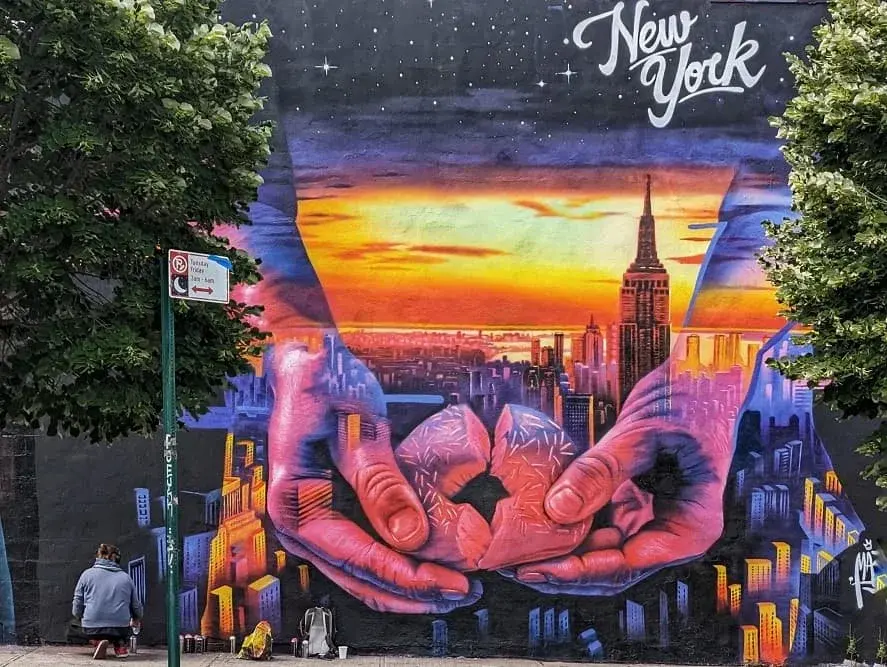
Bushwick is one of Brooklyn’s strongest creative neighborhoods, known for street art, murals, galleries, music venues, nightlife, and independent businesses. Its cultural identity is closely tied to former industrial spaces, warehouse buildings, and a long-standing Latino community. This mix of local history, public art, and creative businesses gives Bushwick a distinct neighborhood character.
Commercial activity in Bushwick is concentrated along Knickerbocker Avenue, Broadway, Myrtle Avenue, and Wyckoff Avenue. These corridors support a mix of food and beverage, retail, nightlife, personal services, and daily neighborhood businesses. Knickerbocker Avenue and Broadway are especially important hubs, helping anchor both local convenience and street-level activity.
Housing choices
Bushwick’s housing stock reflects the neighborhood’s layered history, from older row houses and small multifamily buildings to converted lofts, former industrial spaces, rental buildings, and newer boutique condominiums. Its older properties preserve a classic Brooklyn residential character, while former factory and warehouse buildings continue to shape Bushwick’s creative, loft-style identity.
For a closer look at a local boutique condominium, read the Stanhope Foundry residence guide and compare its spaces and amenities with your housing needs.

Bushwick's street art, independent businesses and varied housing offer several ways to experience the neighborhood. Compare the station, shopping routes, layout and outdoor space that fit your everyday plans. The NYC home-buying process can help you prepare for the next stage.


Comments